

Megan's story: Unearthing the ancient world
'One of my most treasured possessions is a picture of me standing next to the sign at Uruk, arguably the world's first city, where the first written word was recorded.'
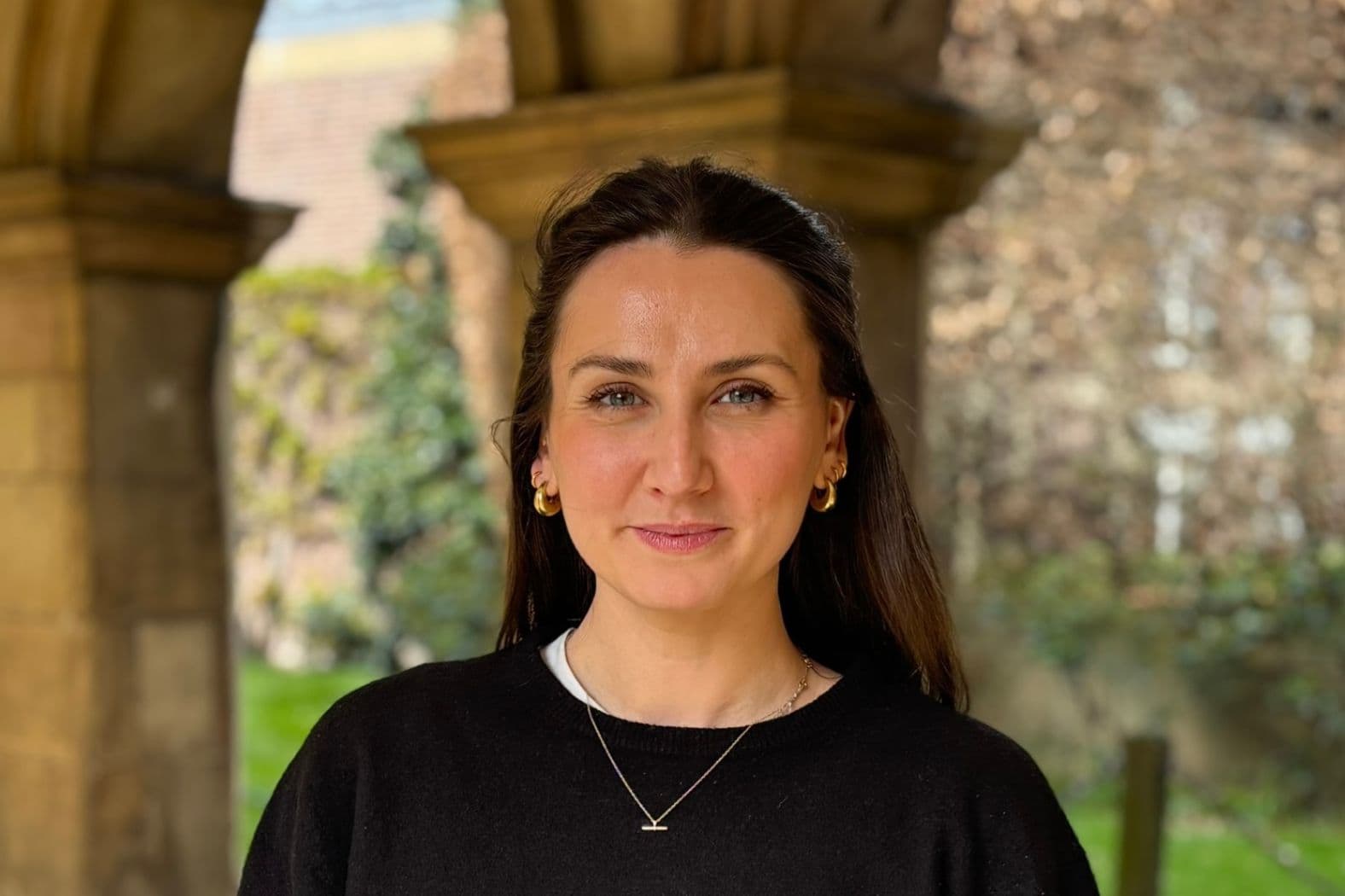
Archaeologist and fourth-year PhD student Megan Hinks researches bitumen, a petroleum-based substance used extensively across Mesopotamia and wider West Asia between the third and second millennia BC.
A college grant enabled Megan to travel to Iraq, where she studied bitumen first-hand and visited some of the world's earliest urban centres. The trip was an important step in research that began after her master's degree at University College London (UCL) and now examines the complete life cycle of bitumen in southern Iraq: its trade, production, use and reuse.
'I'm looking at how this material was used and what it can tell us about the socioeconomic and the political dynamics of the time. What’s so interesting about bitumen is that it is everywhere throughout society. It was used for so many things, integrated into the lives of people at every level of society.'
Her research traces how bitumen was sourced and traded, how craftspeople used it in production, and how communities may have recycled and repurposed it rather than discarding it. Together, these practices offer evidence of the economic relationships, practical knowledge and use of resources that shaped everyday life.
'Studying this prolific substance on the ground in Iraq has been an incredible experience. To have the opportunity to visit these sites has been very special.'
The Derek Brewer Research Studentship has given Megan the financial security to concentrate fully on her PhD, while also helping her to build the experience needed for the next stage of her academic career.
'It was amazing to receive this award, for which I’m so grateful. It meant I could have that stress of worrying about money throughout my time here taken off my shoulders, allowing me to focus entirely on my research.'
A Cambridge community of opportunity
The studentship's impact has extended beyond Megan's own research. During her time at Cambridge, she has supervised undergraduates, contributed to academic publishing and drawn on expertise and facilities across the university.
'Being part of Cambridge and the college community has opened the door to a wide range of opportunities and resources that I would not otherwise have had the chance to experience.'
'There is a lot of collaboration across departments, and I have been using the labs at the Department of Chemistry, for example, for the scientific analysis of bitumen samples.'
Megan has also valued the support she has received in college. Her tutor has helped her to stay on track and has been, in her words, 'incredibly supportive' throughout the planning of her PhD. 'I’m so thankful for the encouragement and kindness I have received in the college.'
Through supervising undergraduates, Megan has been able to build close working relationships with students and see their confidence and understanding develop. The experience has also strengthened her own skills as a teacher and mentor.
'Teaching has been a particularly fulfilling part of my time in the department. Not only has it helped me grow as an educator, but it has also allowed me to take on a more pastoral role and support students as they progress through their learning.'
Megan has also taken on the substantial role of general editor of the Archaeological Review from Cambridge (ARC), a postgraduate, student-led, peer-reviewed journal published since the early 1980s. The position has given her experience of academic publishing and enabled her to support other early-career researchers.
'Working on the ARC has given me a fascinating insight into aspects of the academic publishing industry, as well as the opportunity to work closely with researchers looking to publish their work, many of whom are early-career academics.
'A key part of the role was helping to platform and promote these researchers, while also engaging with expert peer reviewers from across the field. Through this process, we were able to build valuable relationships with leading scholars and gain a deeper understanding of the research community.'
Alongside her academic work, Megan has become an active member of the college community. She carries out undergraduate supervisions, invigilates examinations, uses the library and enjoys spending time in the gardens.
'One of the social events I have enjoyed most has been the LGBTQ+ Formal Halls. They are always incredibly well attended and have such a welcoming and celebratory atmosphere. What has impressed me most is the college’s commitment to supporting a wide range of events, alongside the fantastic work of the MCR committee in organising such varied and engaging activities throughout the term.'
Building the next chapter
As she approaches the end of her PhD, Megan is preparing to share her findings more widely and considering how to develop her research through the next stage of her academic career.
'I’m really looking forward to sharing my current research openly, so that it is accessible and people can learn about bitumen and its uses in the ancient world.'
Reflecting on the impact of the studentship, Megan says it has given her financial security to pursue her PhD fully, alongside the research, teaching and publishing experience needed for the next stage of her career. She is now applying for postdoctoral funding and considering a range of future research opportunities.
'All of the experience that I have gained here at Cambridge through the support of this scholarship funding will allow me to now carry forward and pursue an academic career.'