


Doug Chalmers
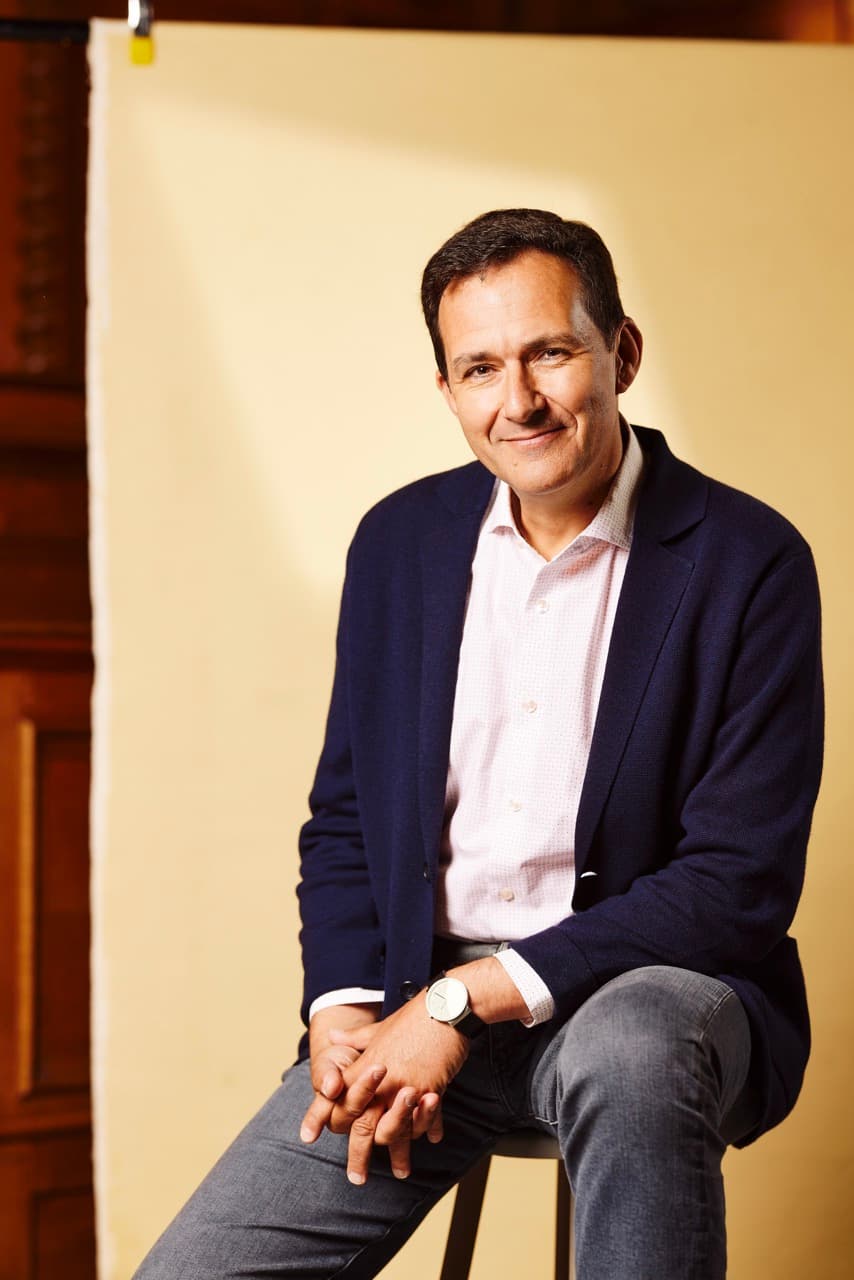
CB DSO OBE MA, MPhil (Cantab.)
Doug is the Master of the College, having been elected as Emmanuel's twenty–eighth Master on 1 October 2021. Alongside his College role, he chairs the University of Cambridge Centre for Geopolitics Management Board, and the Faculty Board of Cambridge Judge Business School. He also chairs the Ethics & Integrity Commission, and serves on the Advisory Board of the Institute for East West Strategic Studies.
Biography
Doug came to the College from Whitehall where, as a Lieutenant General, he had been the Deputy Chief of the Defence Staff (Military Strategy and Operations). An appointment that completed a period of Army service that began in 1984 when he enlisted as a Private Soldier in the infantry. Over those years he held a range of training, staff and command appointments while stationed in England, Wales, Scotland, Northern Ireland, Germany, Cyprus and the United States. He deployed from those bases frequently, witnessing the end of the Cold War, the breakup of Yugoslavia, a UN mission in Cambodia, 9/11 and its aftermath, the rise and fall of ISIS and a pandemic. His service taught him that durable resolutions are hard and only come when multidisciplinary approaches align local needs and tolerances with international resources. Those experiences also made him a passionate advocate for diversity of thought, a climate of inclusion that enables challenge and the development of human potential. He believes that without those characteristics crafting and negotiating such approaches is impossible.
Research Interests
Over the years the Army enabled Doug to study the context behind these world events, initially through a US advanced studies programme in 1999, from which he graduated with an MA, and subsequently by taking a sabbatical to Cambridge to study International Relations, where he became a member of Trinity Hall. He was awarded an MPhil in 2007. His particular expertise, shaped by those periods of study and his personal experiences, was in understanding the causes (and perceptions) of tension, from all perspectives, and the local, regional and international political constraints that surrounded them.
CB DSO OBE MA, MPhil (Cantab.)