

Miles's story: Lasting impact with academic grants
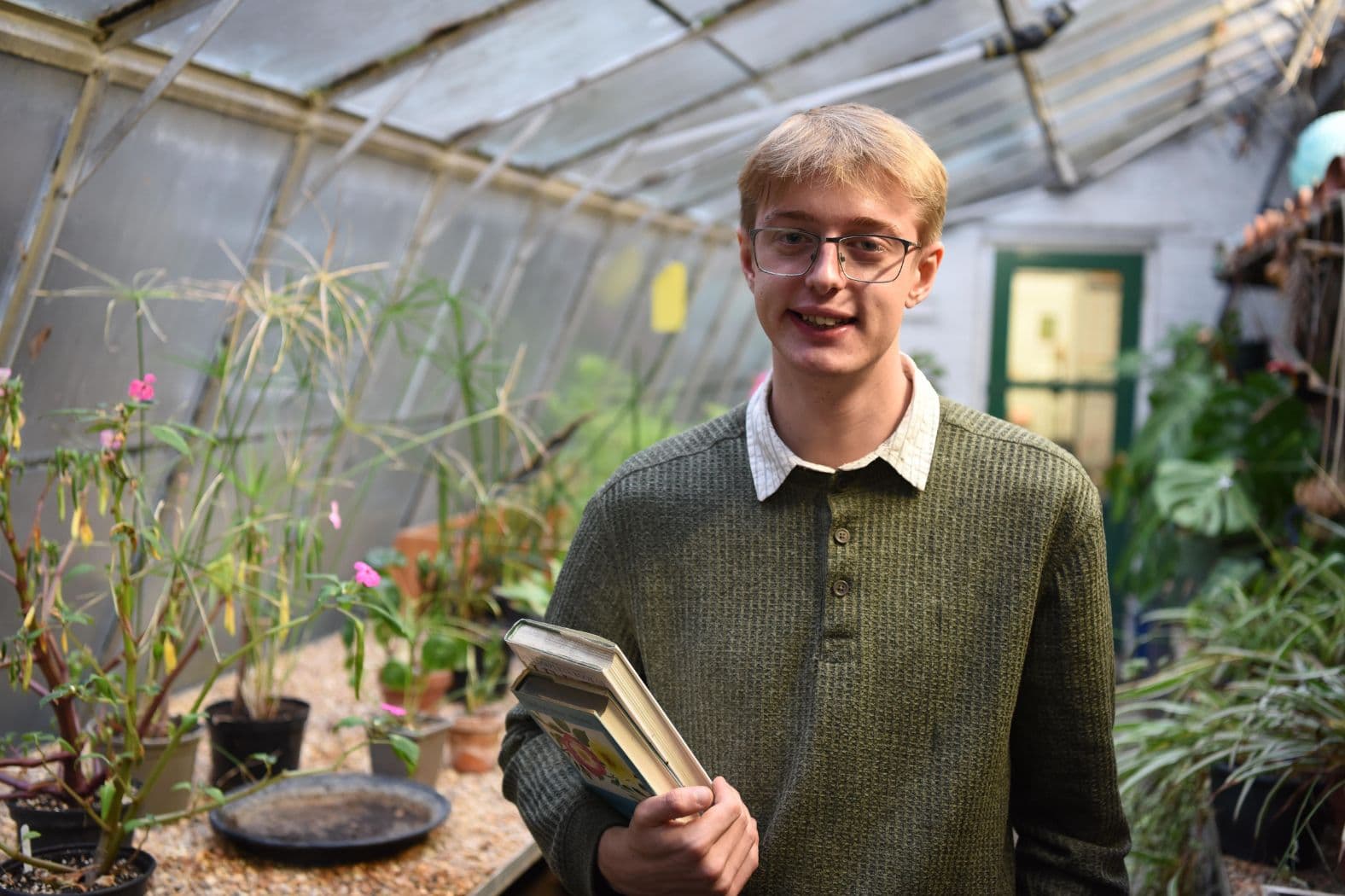
'I’ve always been passionate about fieldwork and getting outside to study the world around me,’ says Miles, a third-year geographer.
Miles’s passion for the great outdoors and his academic interests, led him to spend three-and-a half weeks in the Swiss Alps analysing the tiny pioneer plants that take root on newly exposed ground. ‘I’m particularly interested in vegetation establishment and succession following glacier retreat. This led me to Morteratsch Glacier in Switzerland, which has retreated very rapidly in recent years.’
At the heart of his work lies a pressing global challenge. ‘Unfortunately, glaciers in many parts of the world, including the Alps, will continue to retreat for several decades. I’m interested in what comes next for these landscapes,’ he continues. ‘This starts with the tiny plants growing immediately in front of the glacier. Without these, the rest of the ecosystem can’t develop.’
Funding was crucial to Miles’s project. In 2025 he received a £500 grant from the college to enable him to undertake his research.
‘The award I received was invaluable. Without this support, I wouldn’t have been able to carry out the fieldwork for the duration I did. This was essential to collect enough data. While out in the field, we also made a remarkable discovery: a 3.1-metre sub-fossil Larch tree trunk from the early to mid-Holocene which has been recently exposed. The fact that we find this alongside the tiny seedlings represents a “full circle” moment for vegetation and I hope to introduce this concept in a short publication. ‘Knowing I had the support of the college and those who have donated to Emmanuel was really motivating and was an added driver in ensuring I could deliver results.’
The research has opened new possibilities for Miles’s future. ‘The research I’m doing has led me to want to progress to a research Master’s or an MPhil after I graduate this year. This is a fascinating area of research and there is the potential to have a real world impact. The communities who live in these valleys are experiencing rapid change and they deserve to understand what their landscape might look like in the future.’
Miles is keen to thank all who have supported him throughout his time at Emmanuel. ‘The community of geographers at Emma is very strong with such a diverse set of interests, which has made this a wonderful place to study. I’ve been privileged to benefit from the most supportive Director of Studies. Emma is like home for me and Cambridge is such a unique environment to explore your own areas of interest. I will be forever grateful!'